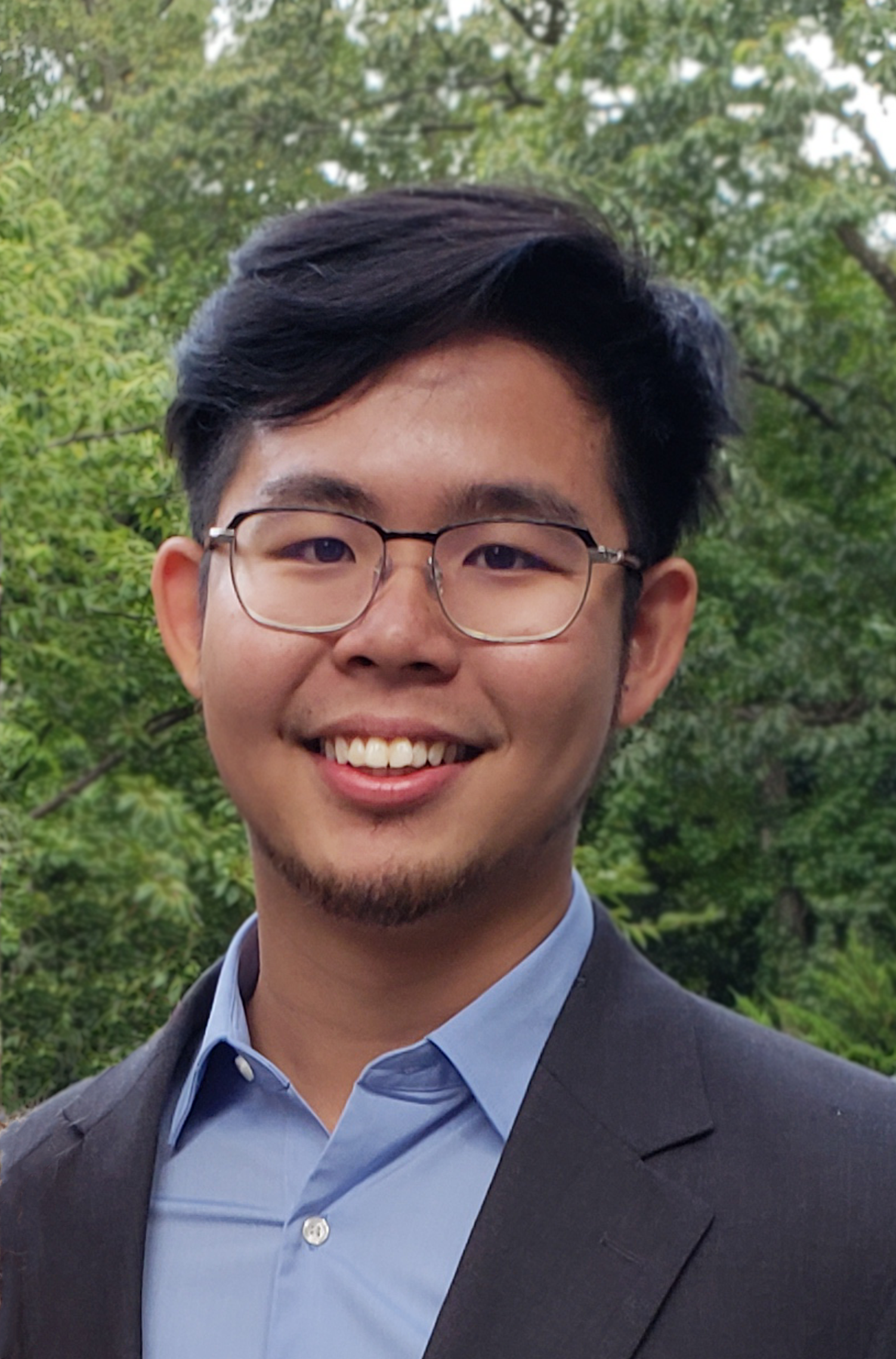
Hi! I'm Wesley Leong (he/him).
I am a fifth-year PhD candidate in Psychology (Language and Cognition program) at the University of Connecticut, advised by Gerry Altmann. I study topics at the intersection of neuroscience, computation, and language, using a combination of behavioral tasks and neuroimaging.
I'm currently working on a two lines of research under the umbrella theme of similarity. (1) What are the consequences of (dis)similarity on object representation? In recent work, we find a neural signature of visual working memory (theta-gamma phase-amplitude coupling) supports how we represent objects in language, and that is sensitive to how much change the object undergoes (preprint here). (2) How does similarity structure our knowledge of labels and concepts? In collaboration with Eiling Yee, we report a preference for similar labels referring to similar things, and show that it overrides other biases like sound symbolism (preprint here).
I was previously a research engineer at Halo Neuroscience in San Francisco, where I studied the effects of transcranial electrical stimulation on human performance. Before that, I graduated from New York University with a BS in Neuroscience, where I wrote my thesis on time perception in the rat cerebellum in Eric Lang's Lab. I also did some work in linguistics, including an MEG study in the Neurolinguistics Lab and a project on tense variation in Singapore English.
On a related note, I am from the tiny island nation of Singapore. I also boulder sometimes (V12 in your gym), and have recently gotten into throwing plastic at trees.